
Tai Chi Ch’uan
Tai Chi is a valuable practice for cultivating balance, harmony, and vitality in one's life.

Tai Chi, also known as Tai Chi Ch’uan, is an ancient Chinese martial art that is practiced for its health benefits, as well as for self-defense. It originated in China and has since gained popularity worldwide as a form of exercise, meditation, and relaxation. The movements are designed to promote the flow of energy, or "qi," throughout the body, and to cultivate balance, flexibility, and internal strength. Regular practice has been shown to improve balance and coordination, reduce stress, enhance flexibility and range of motion, strengthen muscles and bones, and improve cardiovascular health. It is often recommended for older adults as a gentle form of exercise that can help improve overall well-being and prevent falls. While Tai Chi itself is already considered a moving meditation, some practitioners choose to emphasize the meditative aspects even more to deepen their mindfulness and inner focus.
The concept of moving chi through the body's meridians in Tai Chi is based on the principles of Traditional Chinese Medicine (TCM). According to TCM, chi (also spelled "qi") is the vital energy or life force that flows through the body, nourishing and supporting its functions. It is believed that when chi is abundant and flowing smoothly, a person experiences good health, while blockages or imbalances in the flow of chi can lead to illness or discomfort. The meridians, or energy channels, are pathways in the body through which chi flows. There are believed to be 12 primary meridians and 8 extraordinary meridians, each associated with specific organs or functions in the body. These meridians form a complex network that connects the entire body, allowing for the circulation and distribution of chi.
Here are some techniques used in Tai Chi meditation to move chi through the body's meridians:
1. Mindful movements: The slow and deliberate movements of Tai Chi are designed to stimulate and guide the flow of chi through the body. Practitioners pay close attention to the sensations and movements of their body, focusing on coordinating their movements with their breath.
2. Breath control: Deep and relaxed breathing is an essential aspect of Tai Chi meditation. By breathing deeply into the lower abdomen and exhaling fully, practitioners can help activate and direct the flow of chi. They may visualize the breath traveling along the meridians and carrying chi throughout the body.
3. Visualization: Some practitioners use visualization techniques to enhance the movement of chi. They may imagine a stream of energy flowing through the body's meridians, visualizing the chi moving freely and smoothly. This can help to enhance the awareness and intention of moving chi through the body.
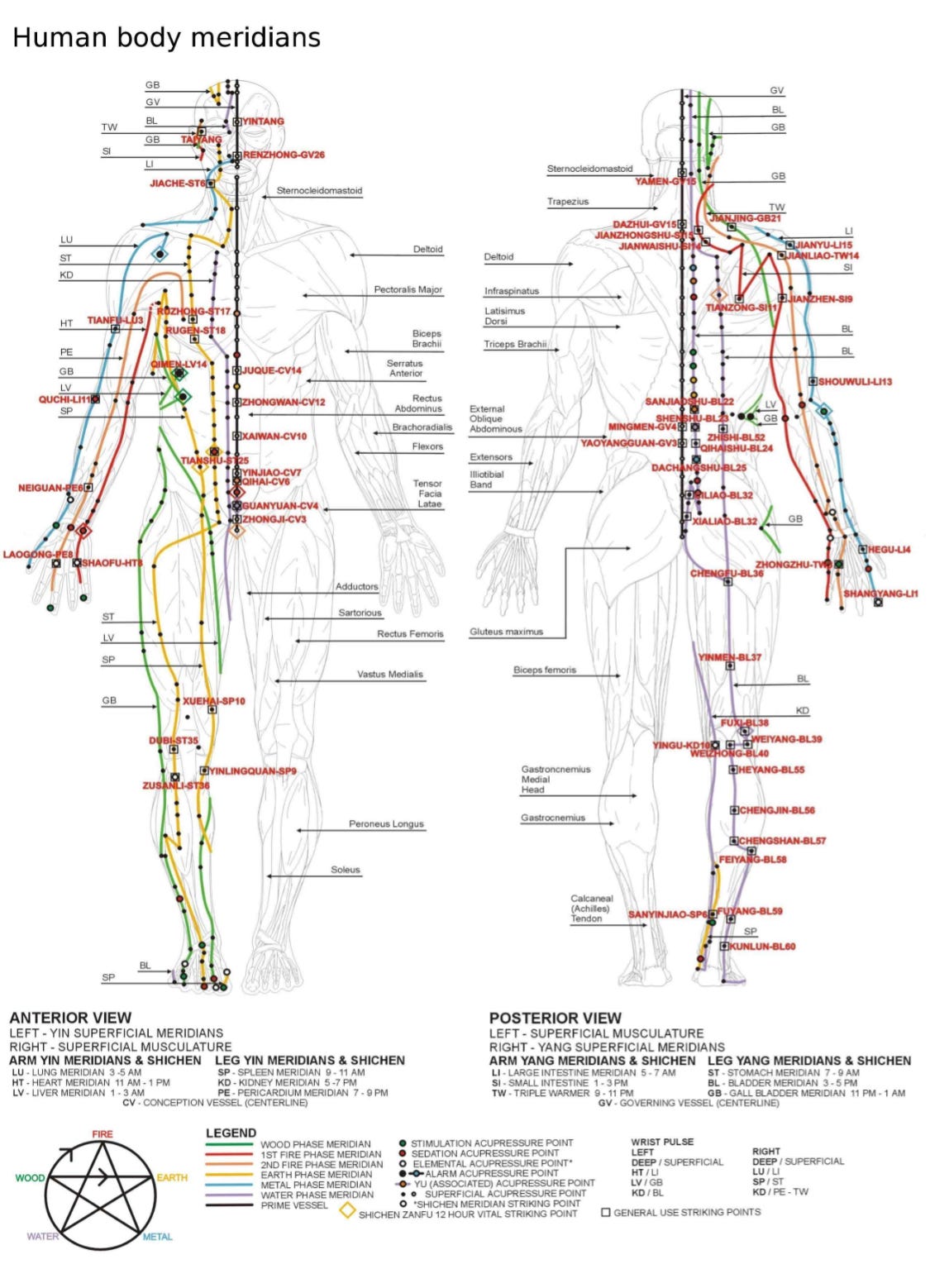
In Traditional Chinese Medicine (TCM), there are 12 primary meridians, These meridians are channels or pathways through which chi, or vital energy, flows in the body. Each meridian is associated with a specific organ or function in the body. Here are the 12 primary meridians:
1. Lung Meridian (LU): The Lung meridian is associated with the lungs and respiratory system. It starts at the chest and runs down the arms, ending at the thumb.
2. Large Intestine Meridian (LI): The Large Intestine meridian is associated with the large intestine and digestive system. It starts at the index finger and runs up the arm, through the shoulder, and up to the nose.
3. Stomach Meridian (ST): The Stomach meridian is associated with the stomach and digestive system. It starts at the eye and runs down the face, neck, and chest, and continues down the legs to the second toe.
4. Spleen Meridian (SP): The Spleen meridian is associated with the spleen and digestive system. It starts at the big toe and runs up the inner leg and abdomen, ending at the chest.
5. Heart Meridian (HT): The Heart meridian is associated with the heart and circulatory system. It starts at the armpit and runs down the inner arm, ending at the little finger.
6. Small Intestine Meridian (SI): The Small Intestine meridian is associated with the small intestine and digestive system. It starts at the little finger and runs up the arm, through the shoulder, and up to the ear.
7. Bladder Meridian (BL): The Bladder meridian is associated with the bladder and urinary system. It starts at the inner corner of the eye and runs down the back, buttocks, and legs, ending at the little toe.
8. Kidney Meridian (KI): The Kidney meridian is associated with the kidneys and urinary system. It starts at the sole of the foot and runs up the inner leg and abdomen, ending at the chest.
9. Pericardium Meridian (PC): The Pericardium meridian is associated with the pericardium (the protective sac around the heart) and the circulatory system. It starts at the chest and runs down the inner arm, ending at the middle finger.
10. Triple Burner Meridian (TB): The Triple Burner meridian is not associated with a specific organ but is related to the regulation of body fluids and metabolism. It starts at the ring finger and runs up the arm, through the shoulder, and up to the side of the head.
11. Gallbladder Meridian (GB): The Gallbladder meridian is associated with the gallbladder and digestive system. It starts at the outer corner of the eye and runs down the side of the head, neck, and body, ending at the fourth toe.
12. Liver Meridian (LV): The Liver meridian is associated with the liver and the regulation of chi flow. It starts at the big toe and runs up the inner leg, abdomen, and chest, ending at the ribcage.
These meridians form a complex network that connects the entire body, allowing for the circulation and distribution of chi. By stimulating and balancing the flow of chi through these meridians, practitioners aim to promote health and well-being.
Check the comments, more YouTube videos, posted there. Push Hands and color video of Cheng Man-Ch’ing.
Available on Amazon.
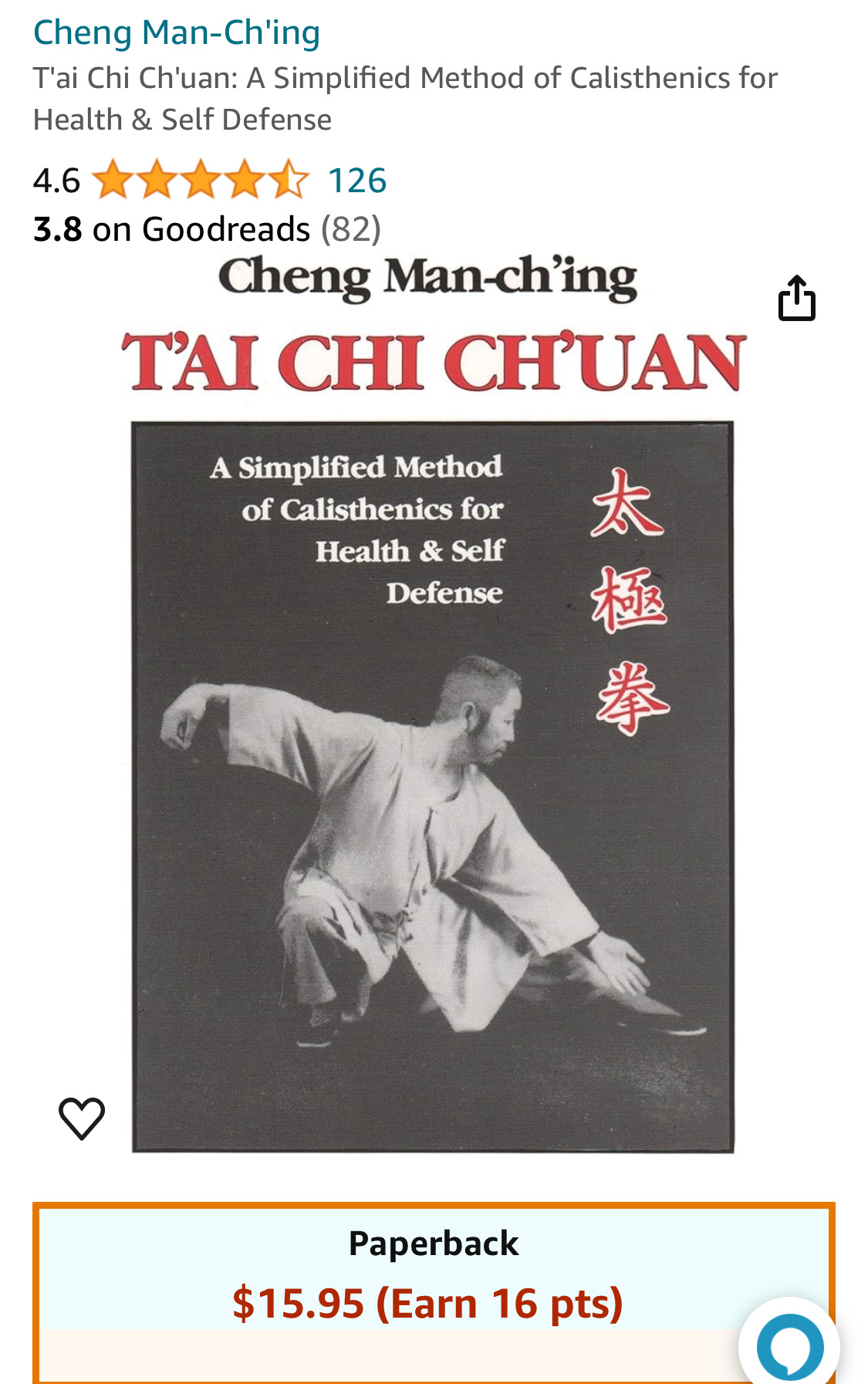
Cheng Man Ching in color video:
https://youtu.be/sy5_d5QUbf8?si=rBuDjgEo9oMwxKM7
Push Hands video:
https://youtu.be/83dYIU9SkNk?si=P_egSAsH2RfuEGjz